
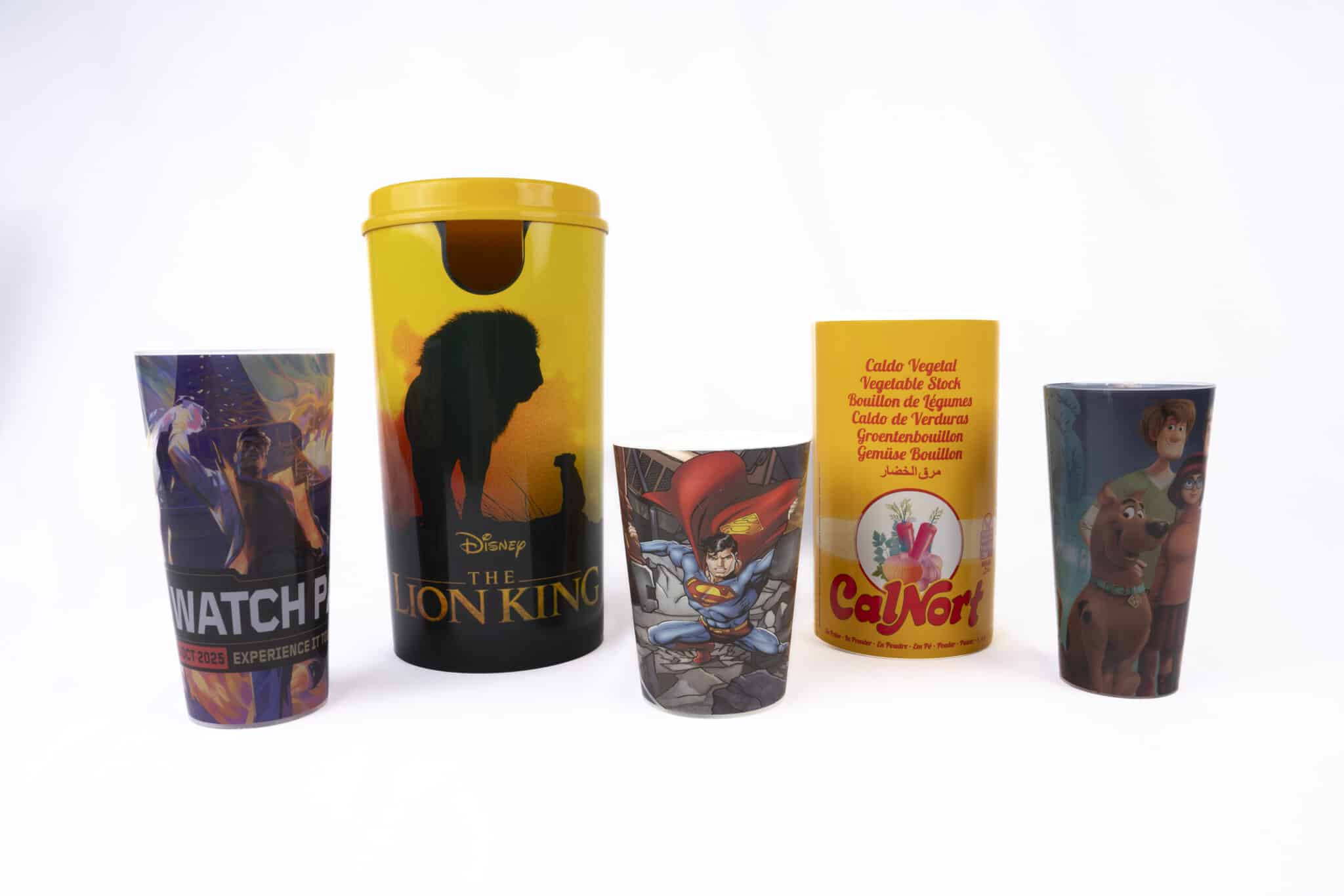
Choosing the right In Mould Label (IML) provider is a strategic decision that directly impacts the final quality of the product, production costs, and the ability to comply with sector regulations. IML is a specialised technology that integrates the label during the plastic container moulding process, and in Spain the number of companies that master this technique is limited due to the technical complexity and investment required.
Unlike conventional adhesive labels, IML requires precise coordination between design, printing and moulding. That is why the choice of partner cannot be based on price alone: technical capability, sector experience and the level of service make the difference between a successful project and costly production problems.
What to Look for in an IML Provider
Before evaluating specific providers, it is important to understand what technical and operational characteristics a company must have in order to offer IML services with guarantees.
Technical Printing Capability
IML requires high-quality offset printing on specific materials (primarily polypropylene) with inks that withstand the high temperatures of the moulding process. Not all offset printers have experience with these substrates and conditions.
Critical technical aspects:
IML labels must be printed on thermoplastic materials that fuse with the container during moulding. Colour registration must be perfect because any deviation is amplified during moulding. Inks must withstand temperatures of up to 200°C without degrading or changing colour.
Knowledge of the Moulding Process
An effective IML provider needs to understand the injection or thermoforming process where its labels will be applied. This includes knowing cycle times, mould temperatures, robotic label handling systems and coordination with container manufacturers.
Technical collaboration:
The best providers work closely with container manufacturers to optimise label design according to the specific characteristics of the mould, the type of plastic in the container and production parameters.
Certifications for Regulated Sectors
If the product is food, cosmetic or pharmaceutical, the provider must have specific certifications guaranteeing that materials and processes comply with safety regulations.
Relevant certifications:
FSSC 22000 for food safety, ISO 9001 for quality management, specific certifications of food-contact materials and complete traceability of all components.
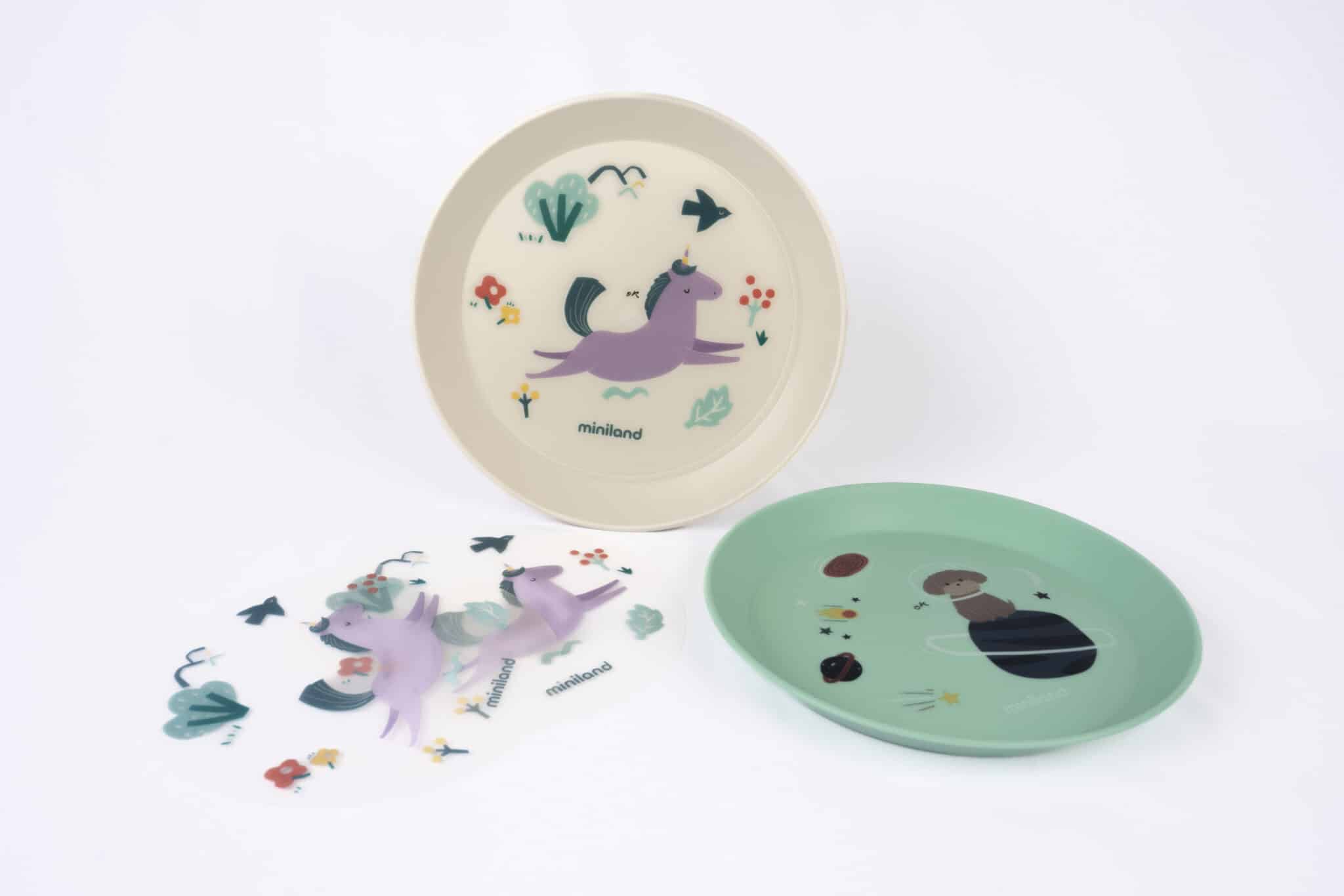
Grifoll Print Solutions: Specialist in IML for Demanding Sectors
Grifoll has specialised in IML solutions for sectors requiring maximum quality and strict regulatory compliance, with over 50 years of experience in specialised printing.
Comprehensive Technical Capability
Grifoll has state-of-the-art offset technology specifically configured for printing on plastic substrates. Experience in colour management on non-porous materials and precise registration control are fundamental to producing IML labels that maintain visual quality after the moulding process.
Specific technical advantages:
- Printing on polypropylene of different weights according to application
- Capability for special inks: metallic, high-opacity, UV-resistant
- Precision die-cutting adapted to complex container geometries
- Automated quality control that detects defects imperceptible to the human eye
FSSC 22000 Certification for Food
This specific international food safety certification guarantees that all of Grifoll’s processes comply with the most demanding standards. For food containers, this is not optional: it is a fundamental requirement that facilitates client audits and simplifies supplier approval.
What this certification implies:
Complete material traceability, microbiological control of facilities, allergen management, continuous staff training in food safety and regular external audits verifying ongoing compliance.
Experience in Key Sectors
Food:
Grifoll produces IML labels for containers of dairy products (yoghurts, desserts, butter), ice cream, meat products, culinary preparations and any food requiring plastic containers with premium presentation. Experience in food labelling regulations and the ability to manage complex nutritional information are key differentiators.
Cosmetics:
Creams, lotions, personal hygiene products and cosmetics increasingly use IML for its ability to create premium containers with high resistance. Grifoll works with brands requiring sophisticated finishes: metallic effects, selective varnishes, special textures that convey quality.
Household chemical products:
Detergents, cleaners and maintenance products benefit from IML for its extreme resistance to moisture, aggressive chemicals and constant handling. IML labels do not peel off, do not deteriorate with product splashes and maintain readability throughout the container’s useful life.
Technical Advisory Service
Grifoll does not only print labels to specifications, but advises from the design phase on what is technically feasible, what materials are optimal for each application and how to optimise the design for the moulding process.
Typical advisory includes:
- Design evaluation: which graphic elements work well in IML and which generate problems
- Material recommendation according to the container’s characteristics and contained product
- Cost optimisation: how to achieve the desired visual effect with the best cost-benefit ratio
- Coordination with container manufacturers to ensure technical compatibility
Production Capacity and Flexibility
Grifoll can work with large volumes for mass distribution brands as well as smaller print runs for premium products or test launches. This flexibility is valuable because it allows designs and market acceptance to be validated before committing to investments in moulding tooling.
The Spanish IML Market
IML in Spain has experienced significant growth in the last decade, driven by brands seeking differentiation in competitive sectors such as food and cosmetics.
Sectors with Greatest Adoption
Dairy products:
IML has become the standard for yoghurts and dairy desserts from premium brands. The ability to create containers with high-quality graphics that withstand refrigeration and constant handling has made IML the preferred technology in this segment.
Ice cream:
Ice cream containers face extreme conditions: freezing, condensation when taken out of the freezer, handling with wet hands. IML offers durability that traditional labels cannot match.
Cleaning products:
The chemical resistance of IML is ideal for detergents and cleaners where adhesive labels deteriorate quickly with product splashes.
Current Trends
Sustainability:
IML facilitates recycling because label and container are the same material (polypropylene), avoiding the need to separate components. This is increasingly valued by brands with sustainability commitments and by recycling regulations.
360° decoration:
Unlike adhesive labels that cover part of the container, IML allows complete decoration including the base of the container, creating more impactful presentations on the shelf.
Special effects:
Metallic, holographic, tactile textures: IML allows effects that communicate premium effectively.
IML Provider Selection Criteria
Demonstrable experience:
Request references from similar projects in sector and volume. A provider with experience in your specific sector will better understand the technical and regulatory requirements.
Response capacity:
IML requires precise coordination between design, label production and the moulding process. An agile provider that responds quickly to technical adjustments is essential for meeting deadlines.
Technical support:
Beyond producing labels, the provider must be able to advise on design optimisations, resolve problems on the moulding line and propose continuous improvements.
Verifiable certifications:
Not just asking what certifications they have, but requesting documentation to prove it. For food, FSSC 22000 must be current and up to date.
Transparent cost structure:
IML has setup costs (plate preparation, colour adjustments) and variable costs (printing, material). A professional provider clearly itemises these concepts and explains how they are optimised in volume.
Conclusion
Choosing the right IML provider in Spain requires evaluating technical capability, sector experience, certifications and service approach beyond unit price. IML is not a commodity: it is a specialised technology where the provider’s experience makes the difference.
Grifoll Print Solutions combines consolidated technical experience, FSSC 22000 certification for food, specialised advisory capacity and flexibility for projects of different scale. It is not just about printing labels, but about being a technical partner that helps optimise the final result of the container.
Are you evaluating IML for your product?
Our technical team can analyse the feasibility of IML for your specific application, recommend optimal materials and finishes, and coordinate with your container manufacturer to ensure an efficient implementation process. With over 50 years of experience and FSSC 22000 certification, we guarantee solutions that meet both technical and regulatory requirements.
