
Booklet labels, or fold-out labels, have become an intelligent solution for products that need to communicate extensive information without compromising packaging design. Although the initial cost may be higher than that of a traditional label, the operational, regulatory and marketing advantages more than justify the investment.
Maximum information without increasing packaging size
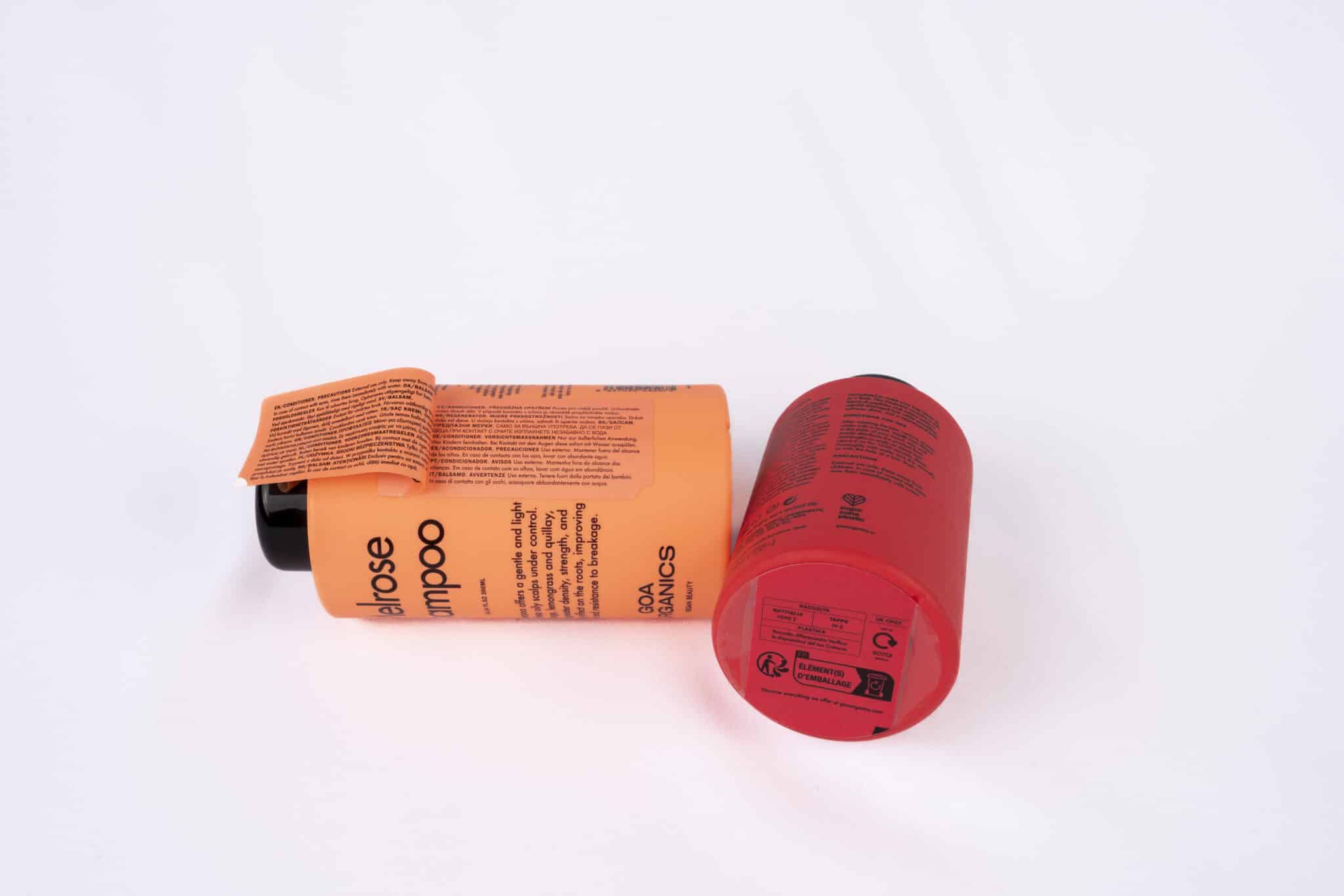
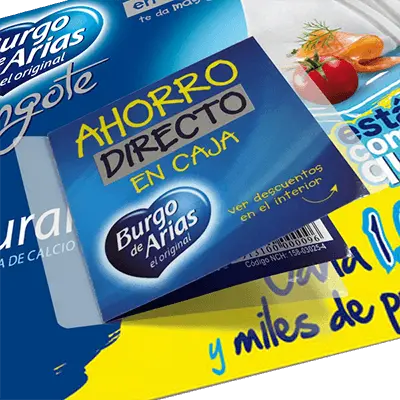
The most obvious advantage of booklet labels is their ability to include multiple pages of information in the same space occupied by a conventional label.
Space optimization
A small package can contain all the information required by regulations without needing to redesign the product format. This is especially relevant in sectors such as cosmetics, pharmaceuticals and food, where regulations require full ingredients, instructions for use, warnings, claims and legal texts to be included in several languages.
Flexibility in exterior design
The outer face of the booklet label preserves the product’s commercial design without text overload. All technical, regulatory and legal information is contained inside the fold-out label, allowing the package to maintain a clean and attractive appearance on the shelf.
Content scalability
As a product evolves and needs to include more information (new certifications, additional claims, markets with different languages), the booklet label can be expanded by adding pages without modifying the base packaging.
Simplified regulatory compliance
Regulated sectors face complex labelling requirements that traditional labels cannot adequately satisfy.
Pharmaceutical and parapharmaceutical sector
OTC (over-the-counter) medicines and food supplements must include complete leaflets with detailed composition, dosage, contraindications, interactions and warnings. Booklet labels make it possible to integrate this leaflet into the packaging itself, eliminating the need for a separate insert that can be lost.
This reduces the risk of users losing the leaflet, ensures that the information is always available and simplifies production logistics by integrating packaging and leaflet into a single element.
Cosmetics sector
European Regulation 1223/2009 requires all INCI ingredients, allergen warnings, storage conditions and instructions for use to be listed. Products with multiple variants (different shades, specific formulations) can have common information on some pages and specific information on others.
The same booklet structure can be adapted to different product variants by changing only the pages with variable information, optimizing design and production costs.
Food sector
Products with nutritional, organic or functional claims, or products aimed at specific segments (children, sports, older adults), need space to explain benefits, detailed composition and scientific support for their claims.
Multilingual compliance
Products intended for several European markets can include complete information in all required languages without overloading the exterior packaging design.
Improves the consumer experience
Beyond regulatory compliance, booklet labels can significantly improve how consumers interact with the product.
Organized and accessible information
The page structure allows information to be organized logically: page 1 for ingredients, page 2 for instructions, page 3 for warnings, page 4 for contact and recycling information. This structured navigation is more intuitive than trying to locate specific information in dense continuous text.
Consumer education
Innovative products or products with specific technical characteristics can use the inside space of the booklet to educate consumers about benefits, mode of action, differences compared with alternatives or tips for optimal use. This is especially valuable for premium products where justifying the price requires communicating added value.
Detailed instructions with illustrations
Products that require preparation, assembly or specific application can include step-by-step instructions with illustrations or diagrams. The booklet format allows these instructions to unfold clearly without excessively compressing the images.
Recipes and applications
Culinary products (spices, mixes, preparations) can include recipes or usage suggestions that add value beyond the product’s basic function, encouraging consumer experimentation and satisfaction.
Differentiation and premium positioning
In competitive markets, booklet labels can be a differentiating element that communicates quality and professionalism.
Perception of value
Consumers associate more elaborate labels with higher-quality products. A well-designed booklet conveys that the brand invests in presentation and communication, reinforcing the perception of a premium product.
Brand storytelling
The inside space can be dedicated to telling the brand story, corporate values, artisanal production process, origin of ingredients or commitment to sustainability. This narrative deepens the emotional connection with consumers.
Certifications and endorsements
Products with multiple certifications (organic, fair trade, vegan, gluten-free, cruelty-free) can explain what each seal means instead of simply displaying it, educating the consumer and justifying a higher price.
Sustainability and waste reduction
Although it may seem contradictory, booklet labels can contribute to sustainability strategies.
Elimination of inserts
Integrating leaflets or instructions into the label eliminates the need for separate brochures, reducing materials and simplifying the packaging recycling process.
Smaller packaging
Because no space is needed for an additional leaflet inside the package, the package can be more compact, reducing packaging material, transport space and the carbon footprint associated with logistics.
Recyclable materials
Paper booklet labels can be designed with fully recyclable materials and water-based adhesives, making it easier to recycle the complete package.
Sustainability communication
The booklet space makes it possible to explain the brand’s sustainability initiatives in detail: origin of materials, efficient production processes, carbon offset programs or specific recycling instructions.
Flexibility for marketing and promotions
Booklet labels offer unique opportunities for marketing actions without modifying the product’s base design.
Temporary promotions
Inside pages can include promotional codes, contests, loyalty programs or links to exclusive digital content. These promotions can change between print runs without affecting the product’s permanent exterior design.
Variable content
Special editions, limited launches or collaborations can be communicated on inside pages while maintaining the product’s exterior visual identity.
Cross-selling
The space can be used to promote other products in the range, complementary uses or bundles, encouraging additional purchases.
Surveys and feedback
Including QR codes or URLs that direct users to satisfaction surveys makes it possible to collect consumer feedback in a structured way.
Optimization of logistics and production costs
Although the unit cost of a booklet label is higher than that of a traditional label, it can generate savings in other areas of the operation.
SKU reduction
A multilingual product can use a single reference with a booklet label that includes all languages, instead of maintaining multiple SKUs with labels in different languages. This simplifies inventory, reduces the risk of obsolescence and facilitates international distribution.
Lower reprinting costs
When regulatory information changes (regulatory updates, new warnings, modification of claims), only the booklet label needs to be reprinted instead of redesigning the entire packaging.
Supplier consolidation
Instead of managing separate suppliers for packaging, labels and inserts, all labelling is consolidated into a single element, simplifying purchasing management and quality control.
Grifoll’s comprehensive solution for booklet labels
Grifoll Print Solutions brings decades of specialized experience in booklet labels for regulated sectors, combining technical capability, regulatory compliance and a consultative approach.
Optimized design
The Grifoll team advises on the optimal page configuration, content distribution and information hierarchy to maximize readability and user experience. It is not just about fitting information in, but about organizing it so consumers can easily find what they are looking for.
Specific materials according to application
With FSSC 22000 certification for food and experience in cosmetics and pharmaceuticals, Grifoll recommends suitable materials and adhesives for each type of product: protected papers for products handled frequently, synthetic materials for refrigerated/frozen products, grease-resistant adhesives for meat products, etc.
Functional testing
Before full production, Grifoll produces samples that make it possible to validate opening/closing, resistance under real conditions of use and text legibility, avoiding costly problems on the production line.
Multilingual capability
Established experience in projects that require multiple languages, managing technical translations and ensuring that texts in all languages maintain the same quality and precision.
Comprehensive service
From initial advice on feasibility and configuration, through design and layout, to production and delivery, Grifoll manages the entire process internally, ensuring consistency and agility.
Use cases where booklet labels are especially effective
Food supplements
Products with complex compositions that require an explanation of each ingredient, recommended doses, interaction warnings and studies supporting claims.
Technical cosmetics
Creams with specific active ingredients, anti-aging treatments and dermatological products that need to explain mode of action, key ingredients and application protocol.
Functional foods
Enriched products, probiotics and foods for athletes that must justify their claims with accessible scientific information.
Children’s products
Foods, cosmetics or hygiene products for babies that require very detailed instructions, specific warnings and age-based recommendations.
Imported products
Items that must comply with regulations in multiple European countries and need to include information in several languages while maintaining a coherent design.
Conclusion
Booklet labels go beyond being a solution for meeting regulatory requirements. They represent an opportunity to improve communication with consumers, differentiate in competitive markets, optimize logistics operations and build a deeper brand narrative.
The investment in booklet labels is justified when all benefits are considered: simplified regulatory compliance, better user experience, perception of higher quality, operational flexibility and integrated marketing opportunities.
Grifoll Print Solutions combines more than 50 years of technical experience, specific certifications for regulated sectors and a consultative approach that helps each customer make the most of the advantages of booklet labels.
Would you like to explore whether booklet labels can improve your packaging?
Our team can analyze your product, information requirements and brand objectives to determine whether booklet labels are the right solution and how to optimize their design for maximum impact. With FSSC 22000 certification and experience across all regulated sectors, we guarantee solutions that comply with regulations while improving the consumer experience.
